Documentation Index
Fetch the complete documentation index at: https://docs.qbraid.com/llms.txt
Use this file to discover all available pages before exploring further.
File Browser
The file browser and Files menu enable you to work with files and directories on your system. This includes opening, creating, deleting, renaming, downloading, copying, and sharing files and directories. To open the file browser, click on the FILES tab in the left sidebar (or use shortcutCmd+Shift+F).
The file system can be navigated by double-clicking on folders in the listing or clicking on the folders at the top of the
directory listing. To open any file, double-click on its name, or drag the file into the main work area to create a new tab.
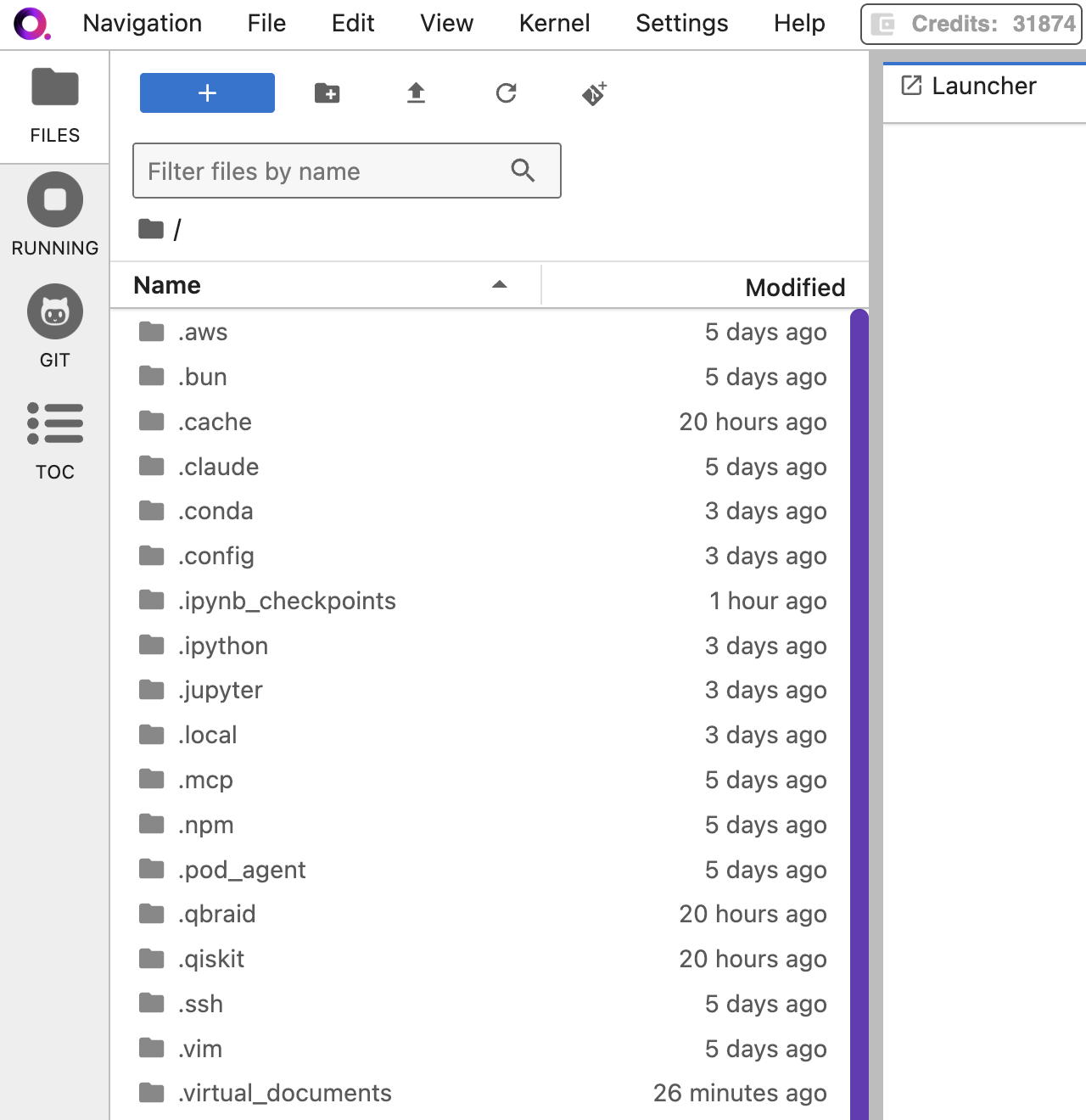
Show hidden files
From the top-bar menu, click on View, and then select Show Hidden Files to toggle the visibility of hidden files in the file browser.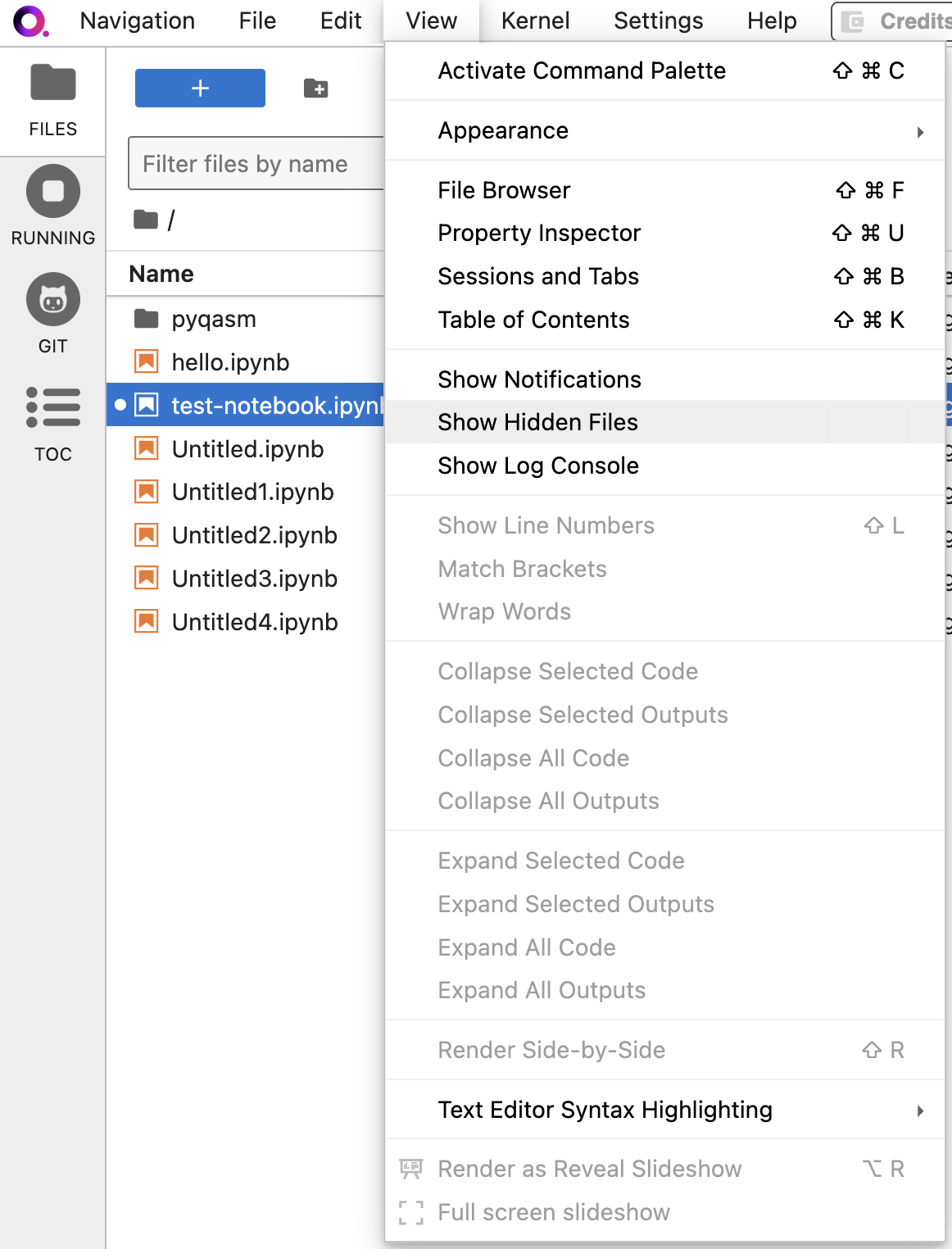
Download files
To download a file, open the file browser, right click on the file, and select Download from the context menu.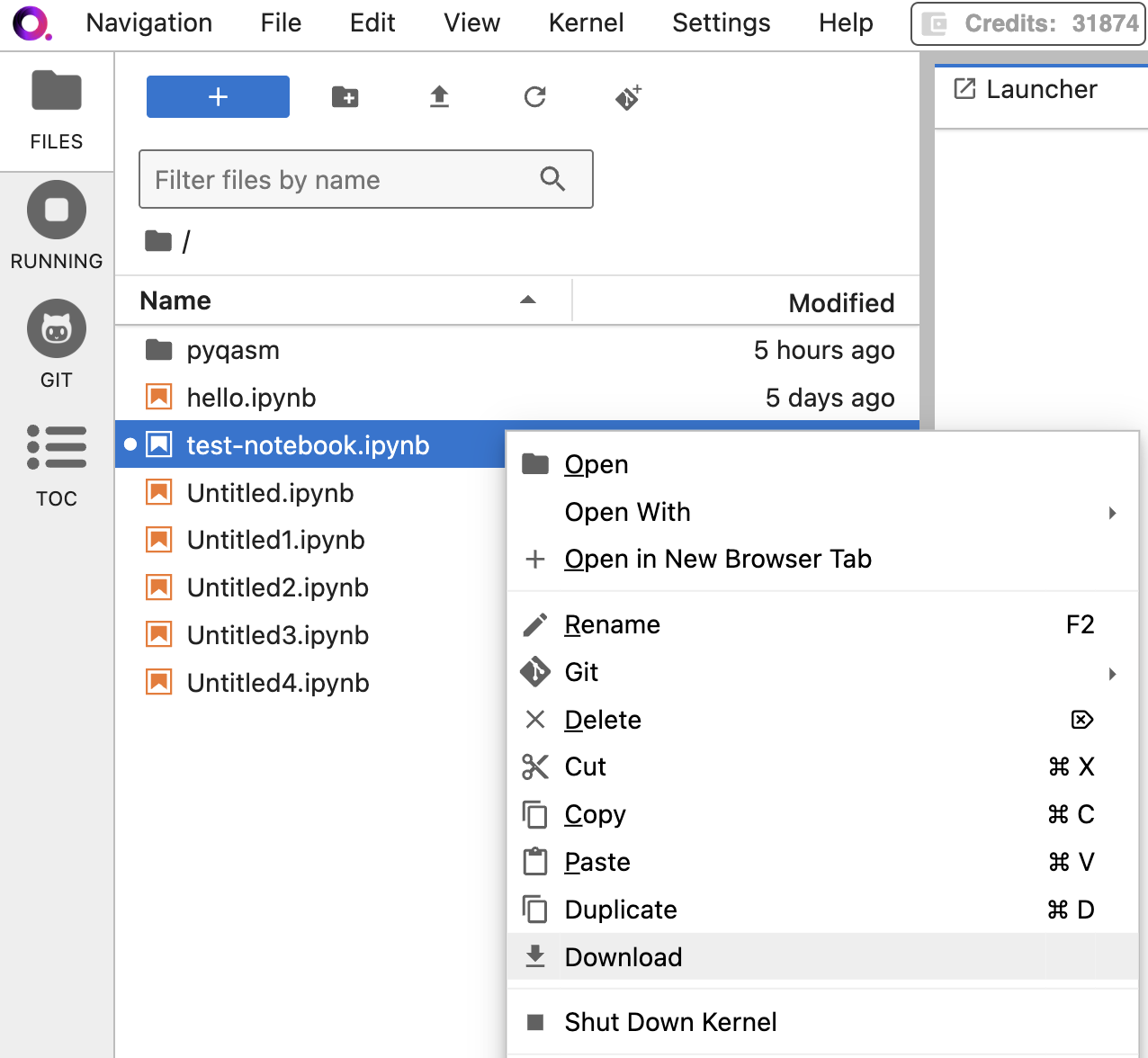
Download directories
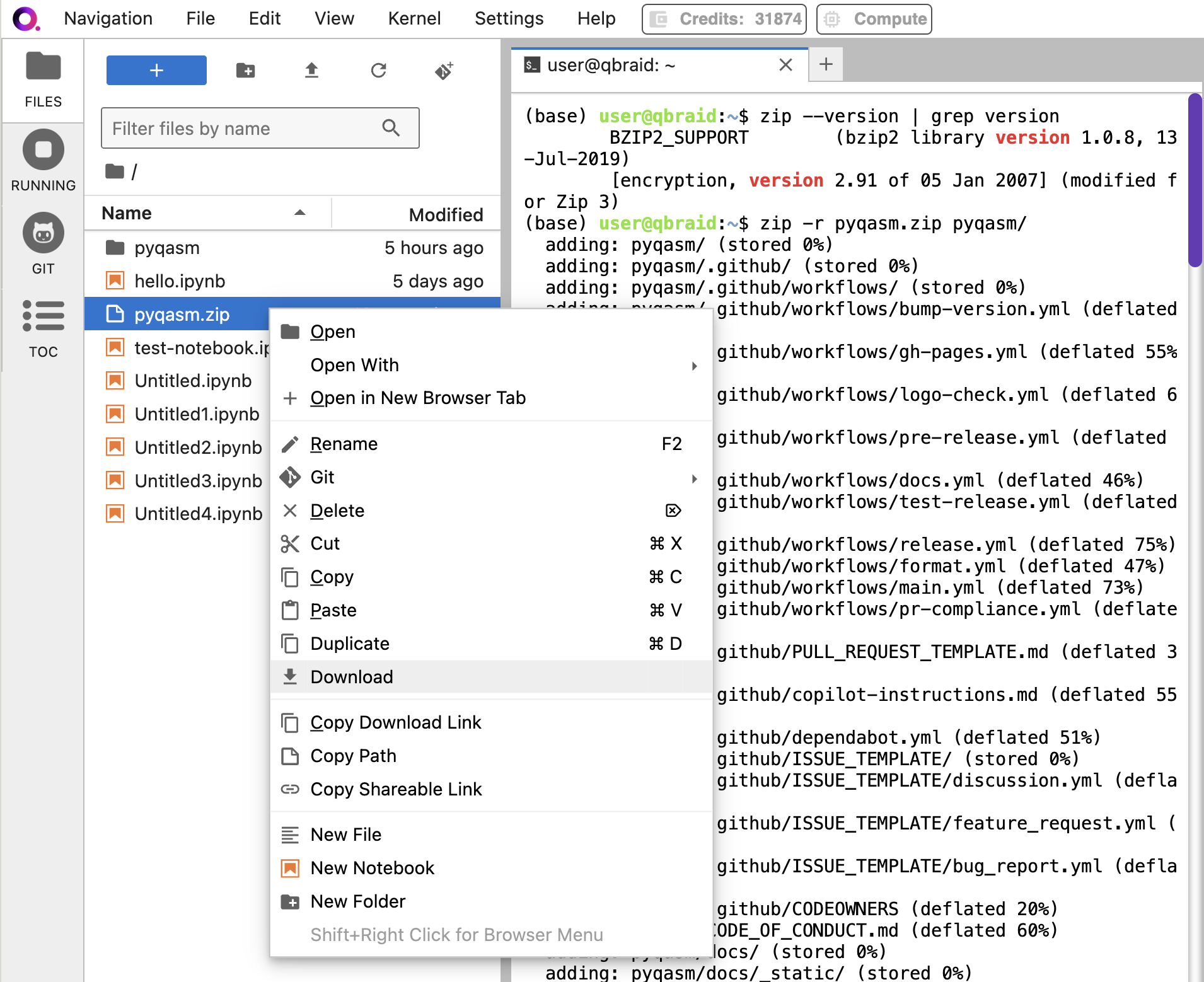
Downloading directories is not currently supported by the JupyterLab file browser. However, as a workaround, you can use the terminal to zip the directory and then download the zip file. First, open a terminal in JupyterLab by clicking on the + icon in the file browser and selecting Terminal under the Then, compress the directory using thezip command, specifying both the target directory’s path and the desired name for the
resulting zip file. The -r option is essential as it instructs zip to include all subdirectories and their contents
recursively. The general command format is as follows: